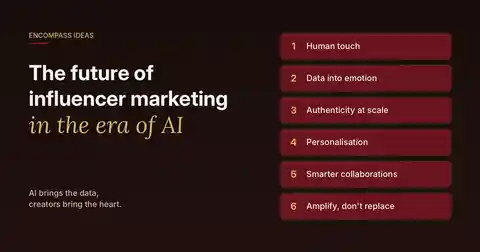
AI is now part of how brands find creators, study audiences and produce content. At the same time, audiences are asking harder questions about what is real. In our view, that makes the human layer of influencer marketing more valuable, not less. Here is what recent research and Indian rules tell us.
Where AI genuinely helps
- Creator discovery: AI can analyse audience demographics, interests and engagement patterns to judge fit, not just follower count.
- Fraud checks: tools can flag bot-like follower clusters, odd follower-to-engagement ratios and audience locations that do not match a creator's claims. Platforms such as HypeAuditor and Modash offer authenticity scores.
- Creative work: in Kofluence's Decoding Influence 2026 report, 59% of surveyed Indian creators said they use AI tools regularly or sometimes, with content ideation the most common use (64.4%). This is a vendor survey of its own creator base.
Industry commentary is consistent on one point: AI can improve creator selection, but it does not replace human judgement about whether a creator is right for your brand.
Why the human layer matters more
Recent surveys show audience caution about AI-made content. They are mostly from the US, so treat them as a signal rather than an Indian benchmark.
- Gartner surveyed 1,006 US consumers in May and June 2026. 35% said they rely on influencers less because of AI, 57% said AI has reduced their trust in brand messaging, and 43% said they rely more on real people for recommendations.
- A Clutch survey of 601 consumers in August 2026 found nearly 90% expect disclosure when AI is used. Clutch is a vendor and the sample is small.
Disclosure and the rules in India
- ASCI's influencer guidelines require virtual influencers to disclose that the audience is not interacting with a real human. The disclosure must be upfront and prominent, not hidden in hashtags or behind a "more" link.
- India amended its IT Rules in February 2026 to require prominent labelling of synthetically generated content on intermediaries. These are platform obligations, so check with counsel how they affect your campaigns.
- Under Indian endorsement guidance, a paid relationship must still be disclosed clearly, whether the creator is human or not.
What to do with this
- Use AI for research, vetting and measurement, and keep a person in charge of creator selection.
- Choose creators whose audiences and values match yours, and brief them on the story, not just the deliverables.
- Disclose paid relationships and any AI use clearly, in line with ASCI guidance.
- Measure outcomes with trackable links or codes so you can tell what is working.
Final thoughts
The question is not whether AI will replace influencers. It is how AI can help brands and creators tell better, more honest stories. This is our editorial view, not a forecast with guarantees.
Sources
ASCI Influencer Advertising Guidelines (virtual influencers, clause 1.4): ascionline.in
MeitY, IT Rules amendment on synthetically generated information, February 2026: meity.gov.in
Gartner press release, 22 September 2026: gartner.com
Clutch report via BusinessWire, 8 September 2026: businesswire.com
Kofluence, Decoding Influence 2026: kofluence.com
Social Samosa, guest post on fake followers and AI tools, 29 July 2025: socialsamosa.com
Where to go next
Explore our Influencer & UGC Marketing service, or read whether AI can replace creativity in social media marketing .