Almost every brand gets told the same thing: you need to be on social media. What is rarely explained is what social media marketing services actually cover.
The usual expectation is simple:
- Post consistently
- Grow followers
- Eventually, sales follow
Plenty of brands do exactly that and end up with a tidy feed, some likes and comments, and very little visible business growth. The problem usually isn't social media itself. It's that publishing content and running a complete marketing system are two different things.
Posting content and building a marketing system are two different things.
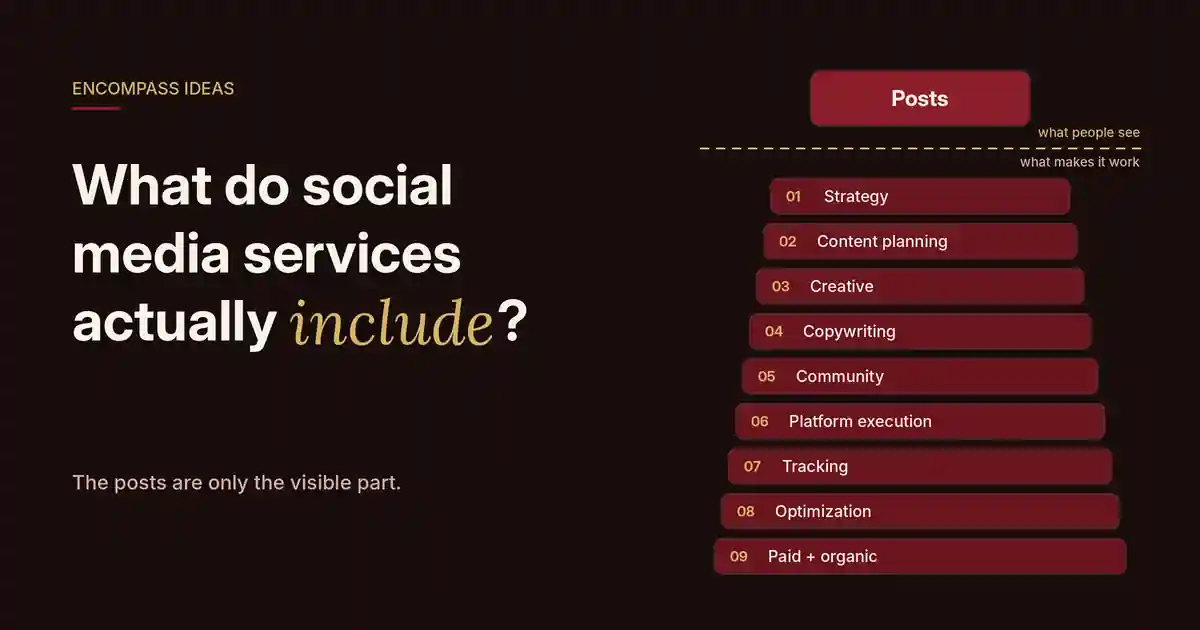
Here are the nine parts of that system, and what each one does for your business.
1. Strategy Before Design
The first job isn't designing posts. A strong strategy answers four questions first:
- Who do you want to reach?
- Why should they choose you over the alternatives?
- Which platforms deserve your time and budget?
- What content moves people from first noticing you to buying?
Without those answers, content becomes random. Take a skincare brand and a nutrition brand. Both may target health-conscious buyers, but their customers ask different questions, engage differently, prefer different kinds of content and follow different paths to purchase. The same playbook won't serve both.
2. Content Planning That Supports Business Goals
A content calendar shouldn't exist just to fill dates. Every post should support a business goal, such as:
- Brand awareness
- Customer education
- Product consideration
- Website traffic
- Enquiries
- Conversions
Good planning connects content to where your customer is in their buying journey. What someone needs to hear when they first discover you is different from what helps them decide to buy.
3. Creative That Stops People From Scrolling
Social media gives you a few seconds to earn attention. In that window, creative has to show what you offer, why it matters and why someone should keep watching or reading. The format can change:
- Static posts
- Carousels
- Short-form videos
- Motion graphics
- Stories
- Platform-specific creatives
The goal stays the same: earn attention before the person scrolls away.
4. Copywriting That Sounds Like Your Brand
Words matter as much as visuals. Good social copy skips the filler, the buzzwords and the exaggerated claims, and sounds like your brand talking naturally to its audience. In practice that means:
- Captions that give the reader something of value
- Opening lines strong enough to stop the scroll
- Clear calls to action
- A brand voice that stays consistent
There's no single right tone. Playful, premium, educational and conversational can all work, as long as the tone fits the brand and stays consistent.
5. Community Management
Publishing is only one part of social media. Once you post, people respond with comments, questions, direct messages, story tags, feedback and brand mentions. Community management covers:
- Responding to comments
- Handling customer queries
- Managing direct messages
- Monitoring brand mentions
- Encouraging conversations
Social media isn't only a channel for publishing. It's also where customers talk to you, and how you respond shapes how they see your brand.
6. Platform-Specific Execution
Copying the same post across every platform rarely works. Instagram and LinkedIn, Facebook and X, YouTube Shorts and Instagram Reels each come with different audience expectations, formats and engagement patterns. Effective social media marketing adapts content to each platform instead of pasting it everywhere.
7. Tracking Beyond Vanity Metrics
Likes are encouraging, but they don't tell the full business story. A clearer picture comes from tracking:
- Reach
- Engagement rate
- Website traffic
- Profile visits
- Click-through rates
- Leads generated
- Conversion performance
- Audience growth over time
Reviewing these regularly shows what's working, what's underperforming and where the next opportunity is. Engagement matters most when it connects to business outcomes.
8. Consistent Optimization
Social media isn't something you set up once and forget. Audience behaviour shifts, platforms add features, content trends move on and competitors keep experimenting. A working system keeps testing and refining, for example by:
- Trying new hooks
- Adjusting posting times
- Testing content formats
- Refining messaging
Small changes, made consistently, add up to meaningful improvement over time. That's why a social media management team, like ours at Encompass Ideas, treats testing and refinement as ongoing work rather than a one-off fix.
9. Collaborative Efforts of Paid and Organic
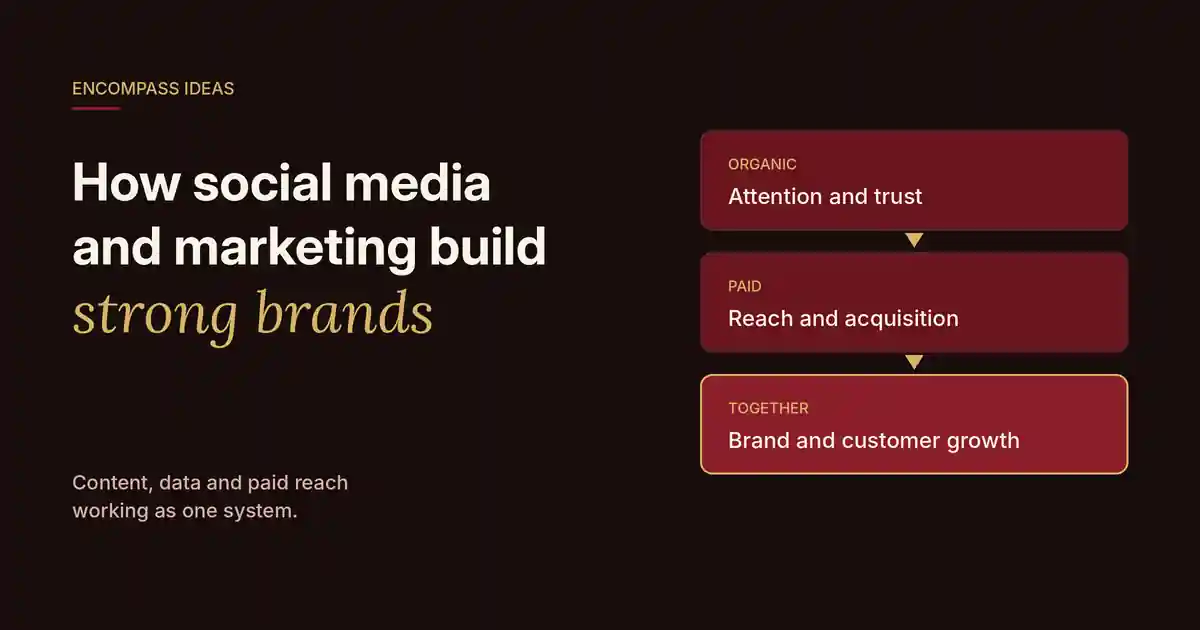
Organic content builds trust. Paid campaigns extend reach. The strongest strategies don't run them as separate activities: organic content shows what is resonating with your audience, and paid campaigns put that content in front of more of the right people. The value is in coordinating the two, not simply running both.
So, What Are You Paying For?
When you invest in social media marketing, you're not just paying for posts. You're paying for:
- Market understanding
- Customer insights
- Strategic planning
- Creative execution
- Consistent communication
- Community engagement
- Performance analysis
- Ongoing optimisation
The posts people see are only the visible output of a much larger process.
When these pieces work together, social media becomes more than a place to publish. It becomes a way to build brand awareness, strengthen customer relationships and support business growth.
Where to go next
Still choosing a partner? Read What Should You Look For in a Social Media Marketing Agency? To see how these pieces come together in practice, read how we work, from first diagnosis to scale , or explore our social media and content marketing service .